
South Africa knows this feeling.
The WhatsApp warnings start first.
Which roads to avoid.
Which shops are closing early.
Which areas might flare up.
Whether staff will be able to get to work.
Whether this will be “another July 2021”.
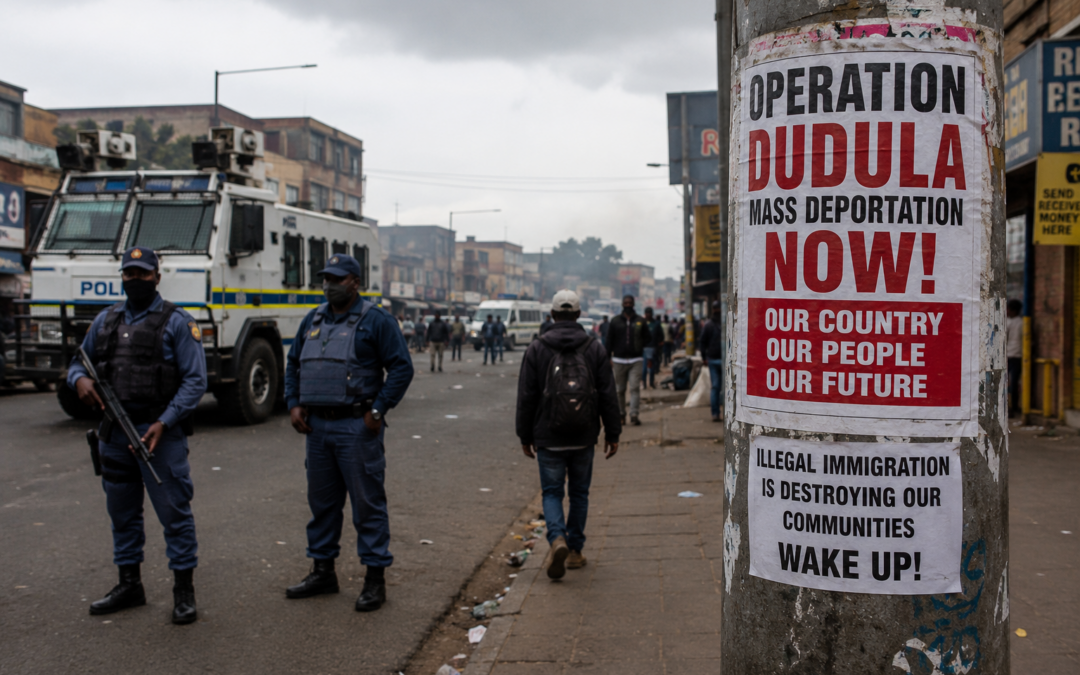
Reports of possible unrest linked to anti-immigration protests have again placed parts of the country on alert. Security companies are preparing contingency plans. Police are being deployed. Businesses are watching transport routes, town centres and retail nodes. Migrants, documented and undocumented, are understandably afraid.
On the surface, this looks like an immigration story.
It is also a behavioural story.
Because when a country becomes anxious, people do not process reality calmly. They do not sit around weighing policy options like economists, lawyers or constitutional scholars.
They look for a pattern.
They look for a villain.
They look for a way to feel back in control.
That is where the danger begins.
South Africa’s frustration is real. It would be lazy and patronising to pretend otherwise. Many citizens are exhausted by unemployment, crime, weak services, failing municipalities and years of political disappointment. People are tired of being told to wait while daily life becomes harder.
The anger is not imaginary.
But anger needs somewhere to go.
And in moments of national pressure, the human brain often prefers a visible target to a complex explanation.
When pressure narrows the lens
Behavioural economics teaches us that scarcity does not only affect our wallets. It affects our attention.
When people feel there is not enough to go around, not enough work, money, safety, dignity, healthcare or opportunity, their field of vision narrows. Patience drops. Complexity becomes exhausting.
The question shifts from:
“How do we fix the system?”
to:
“Who is taking what should have been ours?”
That question changes the room.
Undocumented foreign nationals become behaviourally convenient because they are visible. They are different. They can be named. They can be pointed at.
It is much harder to point at weak economic growth, corruption, poor education outcomes, border-management failure, collapsing municipalities and decades of institutional erosion. Those are real causes, but they are abstract. They do not stand in front of you at a traffic light, worksite, clinic queue or spaza shop.
So the brain does what the brain often does under pressure.
It simplifies.
And simplification feels like clarity, even when it is distortion.
When loss needs a culprit
One of the most powerful forces in human behaviour is loss aversion.
We feel losses more intensely than equivalent gains. Losing R100 hurts more than finding R100 feels good. Losing status, safety, opportunity or dignity cuts even deeper.
That matters in this debate because the emotional frame is not simply:
“What do we need to improve?”
It is:
“What has been taken from us?”
Jobs have been taken.
Safety has been taken.
Hospital beds have been taken.
Business opportunities have been taken.
The future has been taken.
Whether each claim is statistically accurate is not the point. Behaviourally, what matters is that it feels emotionally true.
And emotional truth is often more mobilising than factual nuance.
This is why deadlines are so powerful. A deadline creates urgency. It turns a slow, complicated governance problem into a countdown. It says: enough talking, enough excuses, enough drift.
For people who feel abandoned by institutions, that can feel intoxicating.
Finally, something is happening.
But action is not the same as progress.
Sometimes action is simply anxiety wearing boots.
When stories become evidence
In a tense country, stories travel faster than systems can respond.
A voice note.
A screenshot.
A video clip.
A rumour about a shop being attacked.
A warning from a friend of a friend who “knows someone”.
A post claiming a road has been blocked.
In a calm environment, people might check. In a tense environment, they forward.
This is the availability heuristic at work. We judge the scale of a problem by how easily examples come to mind. The more vivid, recent and repeated a story is, the more representative it feels.
A single incident starts to feel like a trend.
A repeated rumour starts to feel like evidence.
A local warning starts to feel like a national mood.
And soon, people are not only reacting to what has happened.
They are reacting to what they think might happen.
This is how fear becomes contagious.
A shop closes early, and it becomes evidence.
A police deployment becomes evidence.
A neighbour’s fear becomes evidence.
A fake poster becomes evidence.
The country begins to behave its way into the very crisis it fears.
When “us” and “them” replaces “you” and “me”
The most dangerous behavioural shift is not anger. It is dehumanisation.
When uncertainty rises, identity becomes sharper. People start asking:
Who belongs?
Who is safe?
Who is one of us?
Who is threatening the group?
This is in-group and out-group bias, one of the oldest shortcuts in human behaviour.
Once someone is placed in the out-group, empathy drops. Complexity disappears. Individual stories are flattened into categories.
Foreign national.
Illegal immigrant.
Shopkeeper.
Worker.
Outsider.
The category replaces the person.
Someone’s mother, brother, employee, neighbour or child becomes a symbol of the problem.
And symbols are much easier to attack than human beings.
This is why leadership language matters so much. Words are not just commentary. Words create frames. Frames create behaviour. Behaviour creates consequences.
When leaders speak loosely, communities act loosely.
When leaders inflame, people escalate.
When leaders disappear, rumours lead.
When leaders communicate clearly, some of the oxygen is removed from the fire.
When broken trust gives people permission
Beneath this moment sits something bigger than immigration.
It is trust.
People do not trust the state to manage borders.
They do not trust police to enforce the law consistently.
They do not trust municipalities to deliver services.
They do not trust politicians to tell the truth.
They do not trust institutions to protect them.
And when institutional trust collapses, citizens begin to self-authorise.
They start to believe:
“If the state will not act, we must.”
That is a dangerous sentence in any democracy.
Because once people feel morally licensed to enforce their own version of justice, the distance between protest and intimidation becomes very short.
South Africa has seen this movie before. July 2021 showed how quickly grievance can become disorder. It showed how fast fear, opportunism, anger and group behaviour can overwhelm the systems meant to contain them.
We should not need that lesson twice.
The leadership work now
The response cannot be naïve.
It is not enough to say, “Don’t be xenophobic.” That may be morally correct, but it is behaviourally insufficient.
People need more than condemnation. They need containment, clarity and credible action.
Leaders need to validate the frustration without validating the scapegoat.
Yes, South Africans are entitled to demand safer communities.
Yes, the country needs lawful and effective immigration management.
Yes, citizens deserve better public services and credible enforcement.
Yes, businesses need to protect their people and operations.
But none of that justifies intimidation, collective blame or violence.
A country cannot fix institutional failure by turning on the most visible people in the room.
Government needs to communicate clearly about what is legal, what is fake, what is being done and what the consequences are for intimidation. Business leaders need calm scenario planning around staff movement, site security, customer communication and operational continuity. Community leaders need to lower the emotional temperature, not raise it.
Because in volatile moments, ambiguity is petrol.
And silence creates a vacuum.
The behavioural truth
So yes, this is about immigration.
But it is also about scarcity, loss, rumour, identity and broken trust.
It is about what happens when people who feel powerless are offered a target and told it will make them powerful again.
That is the behavioural risk in this moment.
Fear always looks for a target.
Leadership has to help people find the real problem.
Brexit, Regret and the Behavioural Economics of Bad Decisions
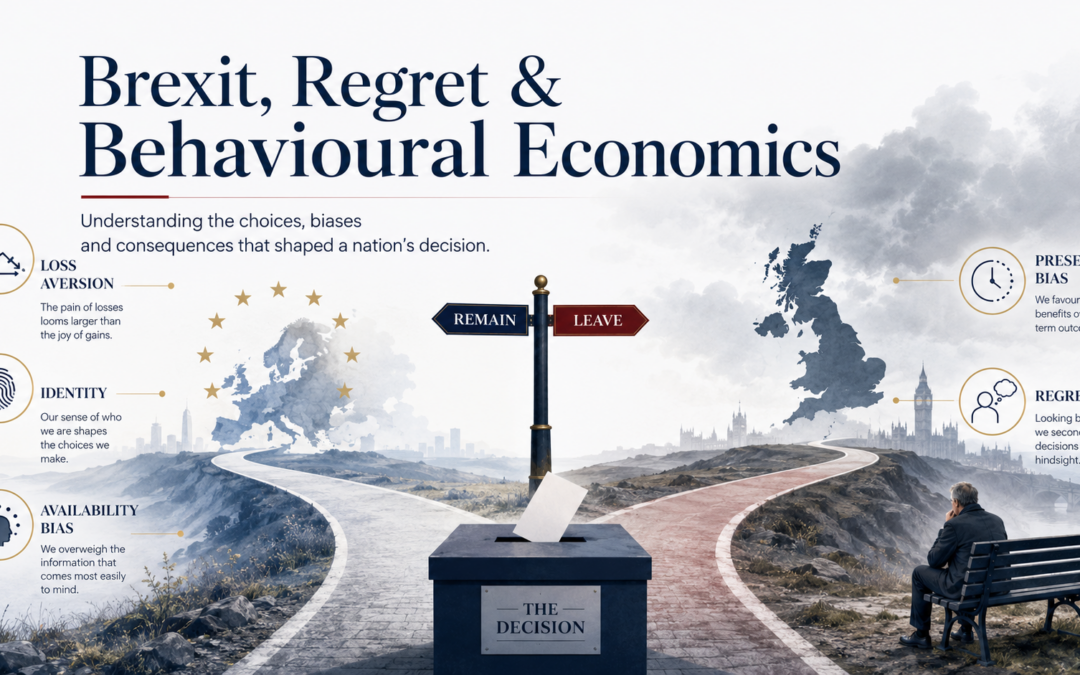
The resignation of yet another British Prime Minister is not only a political story. It is also a behavioural one. Brexit has become one of the most powerful modern case studies in how people make high-stakes decisions under emotion, uncertainty and identity pressure....

Cutting Through the Noise: The Ridgeline Approach to Leadership Communication
Everyone knows the sounds of their incoming communication. Emails landing in the inbox, chat pings online, and WhatsApp beeps all contribute to cognitive overload. The traditional approach to leadership communication often feels like shouting into a hurricane. Louder...

A Laugh in the Spotlight: Some crazy moments as an MC
There’s a certain art to being an MC—balancing professionalism with personality, steering the programme while keeping the mood light. Over the years, I’ve found myself in all sorts of hilarious situations at the podium, but a few experiences stand out as my all-time...

Beyond the Bush Lodge: Why Your Next Executive Offsite is Performance Infrastructure, not a Perk
In the South African business landscape, we are currently navigating a uniquely noisy macro picture. From the accelerating shift toward AI-integrated workflows to the stop-start nature of global trade and local economic pressures, the external environment is...

Leading Through Anxiety: 5 Moves to Lift Morale (Without Sugar-Coating Reality)
South African teams are currently navigating a noisy macro picture. From headlines about AI replacing jobs to public cost-cutting and stop-start global trade, the external environment is amplifying anxiety on the office floor. Research published in Harvard Business...

Purpose Sets the North Star; Strategy Redraws the Route
Leaders often find themselves at a crossroads: should they meticulously refine their strategy, or should they take a step back to clarify their fundamental purpose? At Ridgeline Consulting, we firmly believe that purpose sets the non-negotiables; strategy is the route...

Preserving Your Company’s Unique Flavour: The Art of Cordialism
Companies often find themselves in a peculiar predicament: as they expand, merge, or undergo significant transformations, they risk losing their distinctive essence—their unique 'flavour'. This phenomenon, which Ridgeline Consulting aptly terms 'Cordialism', draws a...

From Quiet Quitting to Committed Teams: A Leader’s Guide to Building a Culture of Control and Voice
Quiet quitting is a design problem, not a motivation problem. Learn how to build a culture of control, voice, and clarity that fosters commitment and drives performance. A practical playbook for leaders. When your best people start doing the bare minimum, it’s easy to...
From Perks to Performance: A Behavioural Strategist’s Guide to Building a Magnetic Culture
In the modern workplace, a common misconception is that superficial perks are the primary drivers of employee engagement and retention. While catered lunches and office ping-pong tables may offer temporary enjoyment, they are ultimately fleeting and fail to address...
Elevating Sales Performance: A Behavioural Strategy for Sustainable Growth
High-performing sales cultures don’t push harder—they design smarter. In today's dynamic marketplace, the traditional 'hard sell' is becoming increasingly obsolete. High-performing sales organisations are not simply pushing harder; they are designing smarter. This...