

Quiet quitting is a design problem, not a motivation problem. Learn how to build a culture of control, voice, and clarity that fosters commitment and drives performance. A practical playbook for leaders.
When your best people start doing the bare minimum, it’s easy to blame burnout or a lack of purpose. But what if the root cause is simpler and more structural? What if quiet quitting is a direct result of a work environment where people feel they’ve lost control?
Recent research confirms what we’ve seen in the field for years: a perceived loss of control is a primary driver of disengagement. When people feel like a cog in a machine—replaceable and unheard—their commitment plummets. They stop taking smart risks, they stop offering discretionary effort, and they start quietly quitting.
At Ridgeline, we see business as an expedition. A successful expedition isn’t about just having a map; it’s about having a team that can navigate unforeseen challenges with confidence. It’s about building a culture where every member of the team feels a sense of ownership and control, where they can see their impact and trust the people around them. When your team has that, they don’t just climb; they ascend.
The Missing Variable in Your Culture: Control
In times of uncertainty—economic volatility, technological disruption, and war—the natural instinct for many leaders is to tighten the reins. More approvals, more meetings, more top-down directives. But this is precisely the wrong response. It unintentionally suffocates the very sense of control that fuels commitment and engagement. The research is clear: if you want to reignite discretionary effort, you need to re-expand perceived control.
Five Levers to Re-engage Your Team
Here are five practical, high-impact strategies you can implement this quarter to build a culture of control and voice:
- Clarify Decision Rights: Ambiguity is the enemy of control. Map out a high-friction workflow and assign explicit D/A/C/I (Decide/Approve/Consult/Inform) roles. When people know who has the authority to make a decision, it eliminates bottlenecks and empowers action.
- Embed Voice in the Workflow: Don’t relegate feedback to suggestion boxes and town halls. Make it a part of your daily operating rhythm. Add a standing 10-minute “design the approach” segment to your key meetings. Ask, “What would you change to make this easier/faster for our customers?” And most importantly, close the loop. Show your team that their voices are heard and that their ideas are shaping how you work.
- Create Line of Sight to Impact: People are more motivated when they can see the direct impact of their work. Translate your high-level strategy into team-level “value paths”. Show each team how their daily tasks are protecting revenue, reducing risk, or elevating the customer experience. When people can see the summit, they’re more willing to make the climb.
- Grant Autonomy with Guardrails: Autonomy without boundaries is chaos. Bounded autonomy, on the other hand, is a powerful driver of speed and control. Define 2-3 pre-authorised moves for each role—discount bands, service recovery gestures, and escalation thresholds. Give your team the freedom to make decisions within a defined framework.
- Signal Anti-Replaceability: People are more committed when they feel valued for their unique expertise. Spotlight individual contributions in your business reviews, not just in your HR programs. Build clear skill pathways and micro-credentials that show your team you’re invested in their growth. When people feel seen and valued, they’re less likely to feel like a replaceable part.
What to Measure Next
- Perceived Control Index: Add three simple questions to your pulse surveys: “I have the discretion to make timely decisions.” “My ideas shape how we work”, and “I see the impact of my work.” Track this metric monthly.
- Cycle Time to “Yes”: Measure the time it takes from when an idea is raised to when a decision is made. Your goal should be to shrink this time continuously.
- Ownership Ratio: What percentage of your projects have a named “business owner” who has the authority to control scope, trade-offs, and sequencing? Aim for a high ownership ratio.
Real-World Results
We’ve seen these principles drive real results for our clients:
- Financial Services (Africa & Middle East): A pricing squad cut exception approvals by 60% by implementing pre-authorised bands and a clear D/A/C/I framework. The result? Higher NPS and a 50% reduction in time-to-quote.
- Telecoms (Southern Africa & EU): A network operations team introduced “operator choice sets”—three vetted responses they can deploy without escalation. The result? A significant lift in first-contact resolution and a measurable improvement in team morale.
These aren’t perks. They’re not about making people happy. They’re about building a high-performance culture that is designed to win. They’re about returning control to the edge, where value is created.
If you’re ready to move beyond the superficial and build a culture that drives commitment and performance, let’s talk. Book Erik to speak at your next leadership off-site, and we’ll turn this research into a practical playbook your teams can start using on Monday morning.

When Fear Looks for a Target
South Africa knows this feeling. The WhatsApp warnings start first. Which roads to avoid. Which shops are closing early. Which areas might flare up. Whether staff will be able to get to work. Whether this will be “another July 2021”. Reports of possible unrest linked...
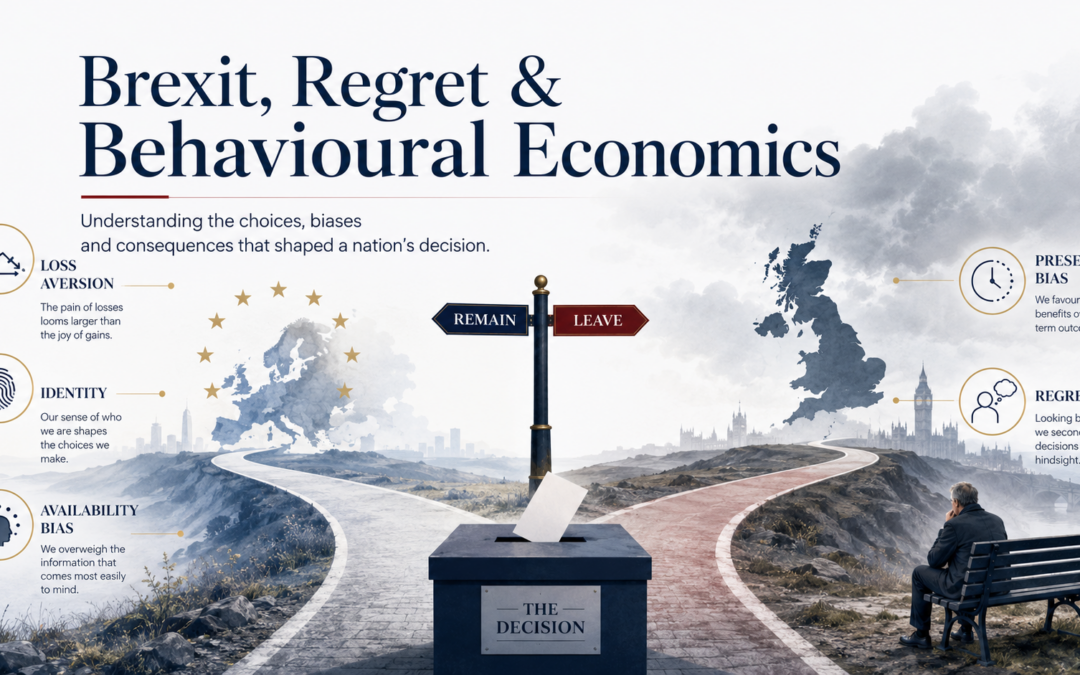
Brexit, Regret and the Behavioural Economics of Bad Decisions
The resignation of yet another British Prime Minister is not only a political story. It is also a behavioural one. Brexit has become one of the most powerful modern case studies in how people make high-stakes decisions under emotion, uncertainty and identity pressure....

Cutting Through the Noise: The Ridgeline Approach to Leadership Communication
Everyone knows the sounds of their incoming communication. Emails landing in the inbox, chat pings online, and WhatsApp beeps all contribute to cognitive overload. The traditional approach to leadership communication often feels like shouting into a hurricane. Louder...

A Laugh in the Spotlight: Some crazy moments as an MC
There’s a certain art to being an MC—balancing professionalism with personality, steering the programme while keeping the mood light. Over the years, I’ve found myself in all sorts of hilarious situations at the podium, but a few experiences stand out as my all-time...

Beyond the Bush Lodge: Why Your Next Executive Offsite is Performance Infrastructure, not a Perk
In the South African business landscape, we are currently navigating a uniquely noisy macro picture. From the accelerating shift toward AI-integrated workflows to the stop-start nature of global trade and local economic pressures, the external environment is...

Leading Through Anxiety: 5 Moves to Lift Morale (Without Sugar-Coating Reality)
South African teams are currently navigating a noisy macro picture. From headlines about AI replacing jobs to public cost-cutting and stop-start global trade, the external environment is amplifying anxiety on the office floor. Research published in Harvard Business...

Purpose Sets the North Star; Strategy Redraws the Route
Leaders often find themselves at a crossroads: should they meticulously refine their strategy, or should they take a step back to clarify their fundamental purpose? At Ridgeline Consulting, we firmly believe that purpose sets the non-negotiables; strategy is the route...

Preserving Your Company’s Unique Flavour: The Art of Cordialism
Companies often find themselves in a peculiar predicament: as they expand, merge, or undergo significant transformations, they risk losing their distinctive essence—their unique 'flavour'. This phenomenon, which Ridgeline Consulting aptly terms 'Cordialism', draws a...
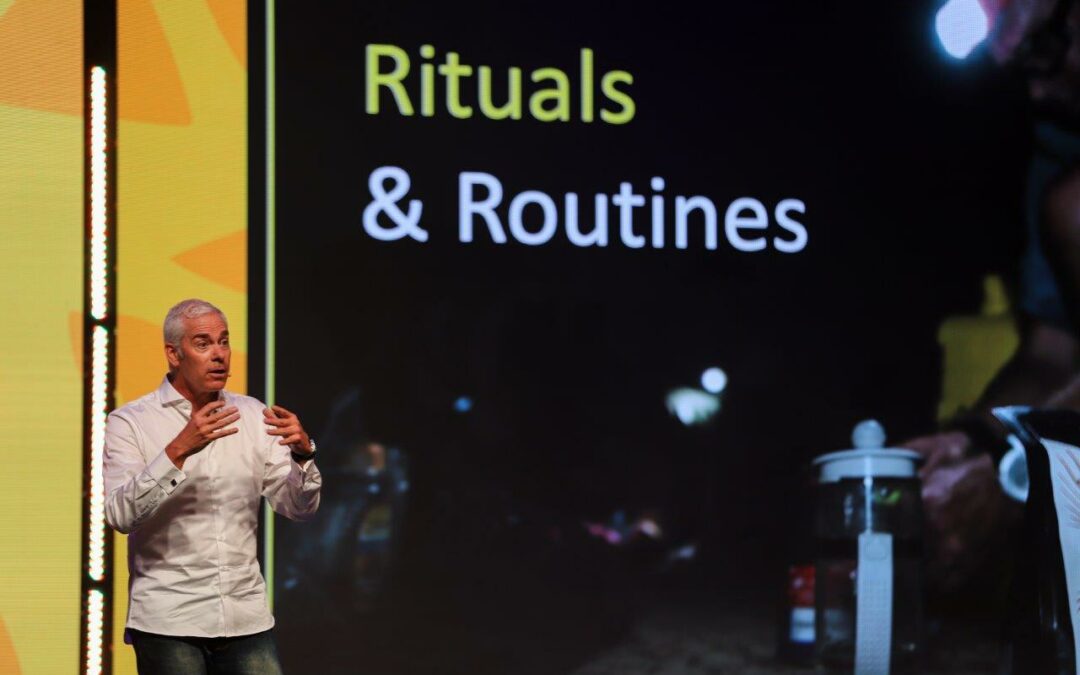
From Perks to Performance: A Behavioural Strategist’s Guide to Building a Magnetic Culture
In the modern workplace, a common misconception is that superficial perks are the primary drivers of employee engagement and retention. While catered lunches and office ping-pong tables may offer temporary enjoyment, they are ultimately fleeting and fail to address...

Elevating Sales Performance: A Behavioural Strategy for Sustainable Growth
High-performing sales cultures don’t push harder—they design smarter. In today's dynamic marketplace, the traditional 'hard sell' is becoming increasingly obsolete. High-performing sales organisations are not simply pushing harder; they are designing smarter. This...