
1. The Illusion of Perks: Why Intrinsic Motivation Matters More
Behavioural science has consistently shown that while extrinsic rewards can provide a short-term boost in satisfaction, they do little to foster long-term commitment or discretionary effort. True employee engagement stems from intrinsic motivation—the desire to perform a task for the inherent satisfaction of the task itself. This is where many organisations miss the mark. They focus on the “what” (the perks) without understanding the “why” (the underlying human needs for autonomy, mastery, and purpose).
A 2021 study by Gallup found that pay and benefits, while important, were not the primary reasons employees left their jobs. Instead, factors like a lack of development opportunities and feeling undervalued were far more significant drivers of attrition. [1]
To build a culture that lasts, leaders must shift their focus from providing distractions to creating an environment where employees feel a genuine sense of connection to their work and the organisation’s mission.
2. The Behavioural Blueprint for a High-Performance Culture
So, how can organisations move beyond the superficial and build a truly magnetic culture? The answer lies in a series of deliberate, evidence-based strategies that target the core drivers of human behaviour.
| Strategy | Behavioral Principle | Actionable Steps |
| Radical Clarity | Cognitive Load Reduction | Replace vague corporate values with concrete, observable behavioural standards for each role. For example, instead of “Excellence”, specify “All client-facing reports must be peer-reviewed before submission.” |
| Compounding Recognition | Operant Conditioning | Implement a system of employee recognition that reinforces desired behaviours, not just outcomes. Publicly praise the process that led to a successful result to encourage replication across the team. |
| Authentic Team Building | Social Learning Theory | Design team-building activities that are directly tied to real business challenges. Host sprint weeks, customer-problem hackathons, or “friction hunts” to foster collaboration and problem-solving in a meaningful context. |
| Visible Career Pathways | Goal-Setting Theory | Create clear and transparent career maps that outline specific skill ladders, micro-badges, and opportunities for rotational assignments. This provides employees with a tangible sense of progress and a reason to invest in their long-term future with the company. |
3. The Adventure Ethos: Consistency Over Speed
In the world of high-altitude mountaineering, the mantra is “slow is smooth, smooth is fast”. This principle is directly applicable to building a high-performance culture. The goal is not to move fast and break things but to build a team that moves with precision, coordination, and a shared sense of purpose. By prioritising consistency in behaviours and processes, organisations can achieve a level of collective momentum that far surpasses the output of teams that are merely moving quickly in different directions.
By adopting a behavioural strategist’s mindset, leaders can move beyond the fleeting fascination of perks and build a culture that is not only a great place to work but also a powerful engine for sustainable performance. The result is a magnetic organisation that not only attracts the best talent but also inspires them to stay and contribute to a shared vision of success.
References
[1] Gallup, “The Great Resignation Is a Great Re-Evaluation,” https://www.gallup.com/workplace/351545/great-resignation-great-re-evaluation.aspx

When Fear Looks for a Target
South Africa knows this feeling. The WhatsApp warnings start first. Which roads to avoid. Which shops are closing early. Which areas might flare up. Whether staff will be able to get to work. Whether this will be “another July 2021”. Reports of possible unrest linked...
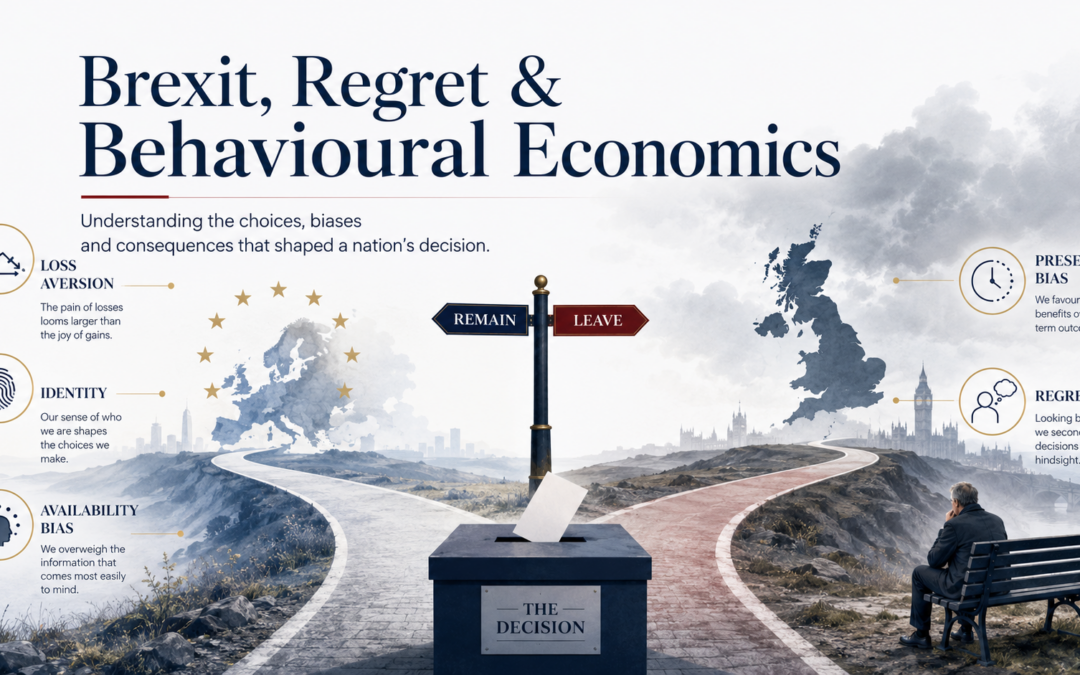
Brexit, Regret and the Behavioural Economics of Bad Decisions
The resignation of yet another British Prime Minister is not only a political story. It is also a behavioural one. Brexit has become one of the most powerful modern case studies in how people make high-stakes decisions under emotion, uncertainty and identity pressure....

Cutting Through the Noise: The Ridgeline Approach to Leadership Communication
Everyone knows the sounds of their incoming communication. Emails landing in the inbox, chat pings online, and WhatsApp beeps all contribute to cognitive overload. The traditional approach to leadership communication often feels like shouting into a hurricane. Louder...

A Laugh in the Spotlight: Some crazy moments as an MC
There’s a certain art to being an MC—balancing professionalism with personality, steering the programme while keeping the mood light. Over the years, I’ve found myself in all sorts of hilarious situations at the podium, but a few experiences stand out as my all-time...

Beyond the Bush Lodge: Why Your Next Executive Offsite is Performance Infrastructure, not a Perk
In the South African business landscape, we are currently navigating a uniquely noisy macro picture. From the accelerating shift toward AI-integrated workflows to the stop-start nature of global trade and local economic pressures, the external environment is...

Leading Through Anxiety: 5 Moves to Lift Morale (Without Sugar-Coating Reality)
South African teams are currently navigating a noisy macro picture. From headlines about AI replacing jobs to public cost-cutting and stop-start global trade, the external environment is amplifying anxiety on the office floor. Research published in Harvard Business...

Purpose Sets the North Star; Strategy Redraws the Route
Leaders often find themselves at a crossroads: should they meticulously refine their strategy, or should they take a step back to clarify their fundamental purpose? At Ridgeline Consulting, we firmly believe that purpose sets the non-negotiables; strategy is the route...
Preserving Your Company’s Unique Flavour: The Art of Cordialism
Companies often find themselves in a peculiar predicament: as they expand, merge, or undergo significant transformations, they risk losing their distinctive essence—their unique 'flavour'. This phenomenon, which Ridgeline Consulting aptly terms 'Cordialism', draws a...

From Quiet Quitting to Committed Teams: A Leader’s Guide to Building a Culture of Control and Voice
Quiet quitting is a design problem, not a motivation problem. Learn how to build a culture of control, voice, and clarity that fosters commitment and drives performance. A practical playbook for leaders. When your best people start doing the bare minimum, it’s easy to...

Elevating Sales Performance: A Behavioural Strategy for Sustainable Growth
High-performing sales cultures don’t push harder—they design smarter. In today's dynamic marketplace, the traditional 'hard sell' is becoming increasingly obsolete. High-performing sales organisations are not simply pushing harder; they are designing smarter. This...