
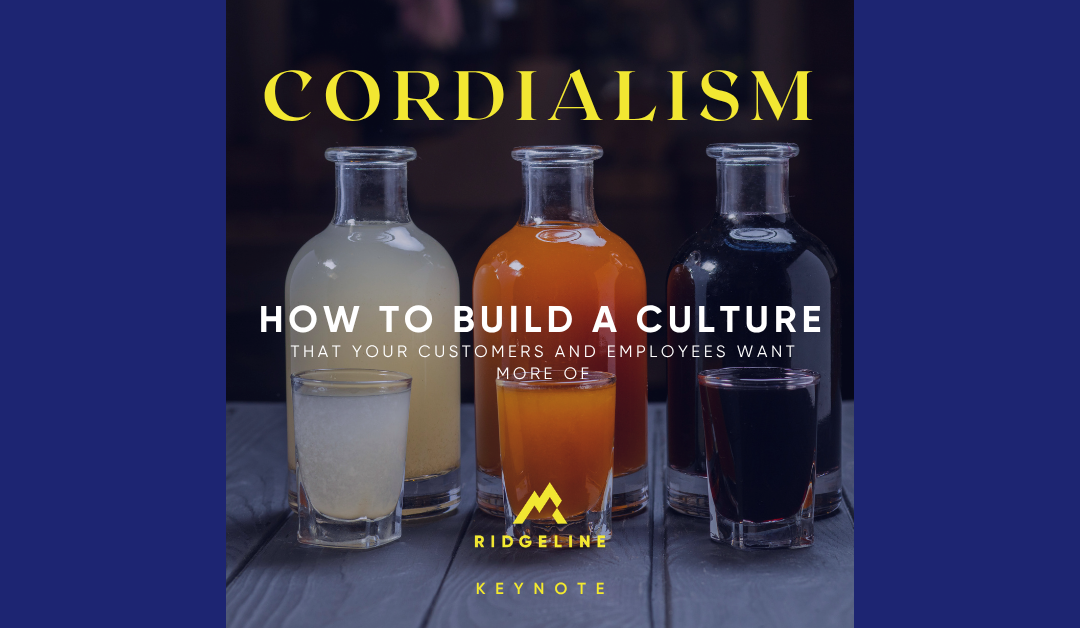
Companies often find themselves in a peculiar predicament: as they expand, merge, or undergo significant transformations, they risk losing their distinctive essence—their unique ‘flavour’. This phenomenon, which Ridgeline Consulting aptly terms ‘Cordialism’, draws a powerful analogy from the world of beverages. Just as a cordial’s vibrant taste can be diluted by too much water, a company’s culture, values, and spirit can become bland and uninspired when not carefully managed during periods of growth and change.
The Dilution Effect: When Growth Waters Down Your Essence
Every successful company starts with a potent ‘concentrate’ cordial, which is the problem a business solves for its market or customers. To the cordial, water is added; a clear vision, a passionate team, and a unique blend of talent and purpose that gives it its signature ‘flavour’. This concentrate is what attracts customers, inspires employees, and differentiates the brand. However, the very act of growth—introducing more people, diverse backgrounds, new systems, and evolving processes—can inadvertently act like adding too much water to a cordial.
This ‘dilution effect’ is often subtle but profoundly impactful. It manifests most acutely in the realms of experience and engagement. In today’s experience economy, a staggering 90% of how stakeholders perceive an organisation is shaped by their direct or indirect experiences, far outweighing traditional marketing messages. The crucial link here is employee engagement: a highly engaged workforce is the secret ingredient that ensures the ‘flavour’ of your brand is consistently delivered. Conversely, a diluted culture, characterised by disengaged employees, inevitably leads to a bland customer experience and a tarnished brand reputation. As the wisdom goes, “You can’t sell it outside if you can’t sell it inside.”
The Five-Step Recipe: Reclaiming Your Concentrate with Cordialism
Ridgeline Consulting’s Cordialism framework provides a strategic ‘recipe’ for companies to not only identify where their ‘flavour’ has been lost but, more importantly, how to restore and intensify their cultural concentrate. This involves a deliberate focus on five interconnected pillars, ensuring your company’s essence remains vibrant and undiluted:
1. Select the Right Ingredients (Get the Right People on Board)
Just as a master cordial maker selects the finest fruits and botanicals, successful companies prioritise recruiting individuals who are the right ‘ingredients’ for their unique cultural blend. Beyond technical competencies, this means seeking out those whose values and ethos naturally enhance the existing ‘flavour’. It’s about building a team that genuinely contributes to and embodies the company’s distinctive taste profile.
2. Define Your Flavour Profile (Give People Purpose)
Every great cordial has a clear and compelling flavour profile. Similarly, in an era where individuals seek meaning beyond mere tasks, companies must articulate a powerful ‘why’ that defines their core. Inspired by Simon Sinek’s Golden Circle, this involves clearly communicating the organisation’s fundamental beliefs and mission. This shared purpose acts as the concentrated extract, motivating and uniting employees around a common, inspiring ‘taste’.
3. Stir with Passion (Get People Engaged)
Engagement is the continuous ‘stirring’ that keeps the cordial vibrant and prevents its ingredients from settling or becoming bland. A truly engaged workforce is emotionally, rationally, and motivationally connected to the company’s objectives. This means cultivating an environment where employees are invested, passionate, and willing to contribute their best, ensuring the company’s mix remains dynamic and full of life.
4. Follow the Master Recipe (Provide the Correct Behavioural Framework)
Consistency is key to a perfectly balanced cordial. Culture is not abstract; it’s the tangible outcome of consistent behaviours. Companies must establish clear behavioural frameworks—their ‘master recipe’—that guide employees at every level. These frameworks translate vision, mission, and values into actionable behaviours, ensuring that what the company promises aligns seamlessly with what it delivers. As the Cordialism philosophy asserts, “Reputations are the result of what people in the organisation consistently do.”
5. Appreciate the Taste (Recognise Performance)
Finally, appreciating the ‘taste’ of success and recognising those who contribute to it is vital. Effective recognition goes beyond standard rewards; it’s about acknowledging and celebrating behaviours that reinforce the desired cultural ‘flavour’. By framing recognition in a way that is relevant and meaningful to employees, companies can powerfully shape and sustain positive actions, creating a virtuous cycle that strengthens the organisational concentrate.
Conclusion: Cordialism – The Strategic Imperative for Undiluted Success
Cordialism is more than a metaphor; it’s a strategic imperative for leaders navigating the complexities of organisational growth and change. It highlights that cultural integrity is not a peripheral concern but the very ‘concentrate’ of sustained success. By proactively addressing the potential for ‘flavour’ dilution and diligently applying the five-step recipe of Cordialism, companies can ensure that their growth enhances, rather than diminishes, their unique essence. Ridgeline Consulting empowers organisations to not just survive change but to emerge from it with their distinctive ‘flavour’—their Cordialism—intact, enriched, and more compelling than ever.

When Fear Looks for a Target
South Africa knows this feeling. The WhatsApp warnings start first. Which roads to avoid. Which shops are closing early. Which areas might flare up. Whether staff will be able to get to work. Whether this will be “another July 2021”. Reports of possible unrest linked...

Brexit, Regret and the Behavioural Economics of Bad Decisions
The resignation of yet another British Prime Minister is not only a political story. It is also a behavioural one. Brexit has become one of the most powerful modern case studies in how people make high-stakes decisions under emotion, uncertainty and identity pressure....

Cutting Through the Noise: The Ridgeline Approach to Leadership Communication
Everyone knows the sounds of their incoming communication. Emails landing in the inbox, chat pings online, and WhatsApp beeps all contribute to cognitive overload. The traditional approach to leadership communication often feels like shouting into a hurricane. Louder...

A Laugh in the Spotlight: Some crazy moments as an MC
There’s a certain art to being an MC—balancing professionalism with personality, steering the programme while keeping the mood light. Over the years, I’ve found myself in all sorts of hilarious situations at the podium, but a few experiences stand out as my all-time...

Beyond the Bush Lodge: Why Your Next Executive Offsite is Performance Infrastructure, not a Perk
In the South African business landscape, we are currently navigating a uniquely noisy macro picture. From the accelerating shift toward AI-integrated workflows to the stop-start nature of global trade and local economic pressures, the external environment is...

Leading Through Anxiety: 5 Moves to Lift Morale (Without Sugar-Coating Reality)
South African teams are currently navigating a noisy macro picture. From headlines about AI replacing jobs to public cost-cutting and stop-start global trade, the external environment is amplifying anxiety on the office floor. Research published in Harvard Business...

Purpose Sets the North Star; Strategy Redraws the Route
Leaders often find themselves at a crossroads: should they meticulously refine their strategy, or should they take a step back to clarify their fundamental purpose? At Ridgeline Consulting, we firmly believe that purpose sets the non-negotiables; strategy is the route...

From Quiet Quitting to Committed Teams: A Leader’s Guide to Building a Culture of Control and Voice
Quiet quitting is a design problem, not a motivation problem. Learn how to build a culture of control, voice, and clarity that fosters commitment and drives performance. A practical playbook for leaders. When your best people start doing the bare minimum, it’s easy to...

From Perks to Performance: A Behavioural Strategist’s Guide to Building a Magnetic Culture
In the modern workplace, a common misconception is that superficial perks are the primary drivers of employee engagement and retention. While catered lunches and office ping-pong tables may offer temporary enjoyment, they are ultimately fleeting and fail to address...

Elevating Sales Performance: A Behavioural Strategy for Sustainable Growth
High-performing sales cultures don’t push harder—they design smarter. In today's dynamic marketplace, the traditional 'hard sell' is becoming increasingly obsolete. High-performing sales organisations are not simply pushing harder; they are designing smarter. This...