

South African teams are currently navigating a noisy macro picture. From headlines about AI replacing jobs to public cost-cutting and stop-start global trade, the external environment is amplifying anxiety on the office floor. Research published in Harvard Business Review argues that in times like these, people don’t need spin; they need clarity, commitment, and calm from their leaders [1]. That is the brief, and it is entirely achievable.
At Ridgeline Consulting, we often use an adventure lens because it resonates with the high-stakes nature of executive leadership. When the weather turns at high altitude, successful leaders don’t deny the storm—they establish a safe base camp, reset the plan, and keep the rope team moving. This is about more than just “getting through it”; it is about leadership development that builds resilient teams capable of performing under pressure.
Below is a practical, behavioural strategy playbook you can deploy this week to enhance employee engagement and foster psychological safety.
Do Sense-Making Before Cheerleading
Anxiety thrives in a vacuum of information. Before you try to “rally the troops”, you must first help them make sense of the environment. Open every key meeting with plain-language context: what is happening “out there”, what it means for our specific book of business, and what changes—if any—are coming.
Be explicit about what you know, what you don’t know, and exactly when you will revisit the unknowns as new data lands. This approach converts corrosive rumours into a shared reality. It signals professional respect and establishes the “calm, committed clarity” that Harvard Business Review highlights as essential during anxious periods [1].
Ritualise Certainty (Cadence Beats Charisma)
In the mountains, predictability calms the nervous system. In the corporate world—especially within sectors like financial services—cadence does the same. When the external world is volatile, your internal operating rhythm must be the anchor.
| Ritual | Frequency | Focus |
| Risk & Blockers Stand-up | Weekly (20 mins) | Identifying immediate hurdles and clearing the path. |
| Priority Decision Window | Fortnightly | Making the “hard calls” on resources and strategy. |
| Retrospective | Monthly | Learning from the past month without assigning blame. |
Publish this rhythm and stick to it religiously. Reliability is a massive cultural asset. By “ritualising certainty”, you are intentionally designing a workplace culture where people feel a sense of control despite the external noise.
Prioritise Progress Over Perfection
When confidence dips, teams naturally default to over-analysis and “perfection paralysis”. As a leader, your job is to counter this with momentum. Focus on “micro-wins” that prove the team is still moving forward.
- Visible Burn-down: Maintain a public list of the top five blockers and cross them off as they are resolved.
- One-Move Improvements: Identify small process fixes that can be shipped within 48 hours.
- Fast Feedback Loops: Close loops with stakeholders quickly to prevent “waiting room” anxiety.
Momentum changes the collective mood. Leaders who model decisive calm reset the emotional climate, allowing teams to stop worrying and start executing.
Protect Energy, Not Just Time
Time is what you book in a diary; energy is what drives performance. In many organisations, energy is leaked through constant context switching, performative busyness, and after-hours anxiety. To build resilient teams, you must protect their cognitive load.
Create “clear-air” blocks for deep work, especially for complex tasks like audit responses or regulated product design. Set clear response-time norms for email and Teams to reduce the “always-on” pressure. Treat major milestones like month-end or quarter-end as “summit pushes”: prepare in advance, execute with intensity, and then intentionally “down-climb” to recover. Sustainable performance always beats heroic, unsustainable sprints.
Make Voice Safer Than Silence
Anxious organisations go quietly. Healthy, high-performing ones institutionalise “voice”. This is the bedrock of psychological safety. If your team is afraid to speak up about risks, those risks don’t go away—they go underground.
Use “red-flag rounds” in which every person names one risk they feel the team might be underweighting. Implement 30-second micro-surveys to gauge sentiment in real-time. Most importantly, thank dissent in public. When a team member points out a flaw in a plan, treat it as a gift that prevents future rework. This strengthens trust and ensures that your employee engagement is grounded in reality, not just compliance.
How to Know It’s Working
Don’t wait for the results of an annual engagement survey to tell you if your culture is shifting. Watch for these fast-moving behavioural indicators:
- Cycle-Time Compression: Approvals move faster because the “rules of the game” are clearer.
- Constructive Dissent: People feel safe enough to challenge ideas in forums rather than whispering in the corridors.
- Cleaner Execution: Fewer “dropped balls” at hand-offs and a reduction in escalations around change windows.
- Pulse Score Uptick: Steady improvement in weekly scores for statements like “I know what matters most this week” and “I feel safe to raise concerns.”
What to Do Next
Culture shifts through repeated behaviours, not through posters on the wall. Pick one ritual from the list above and implement it in your next leadership week. Once that is embedded, layer in a second.
If you would value a catalyst to accelerate this process, we facilitate focused leadership and culture sprints. We work with your executive and BU heads to map your specific context, codify your operating cadence, and equip your managers with the practical scripts needed to lead with clarity, commitment, and calm.
Book Erik to facilitate a Leadership & Culture Sprint for your team.
Let’s build resilient performance—at altitude—without losing people on the climb.

When Fear Looks for a Target
South Africa knows this feeling. The WhatsApp warnings start first. Which roads to avoid. Which shops are closing early. Which areas might flare up. Whether staff will be able to get to work. Whether this will be “another July 2021”. Reports of possible unrest linked...
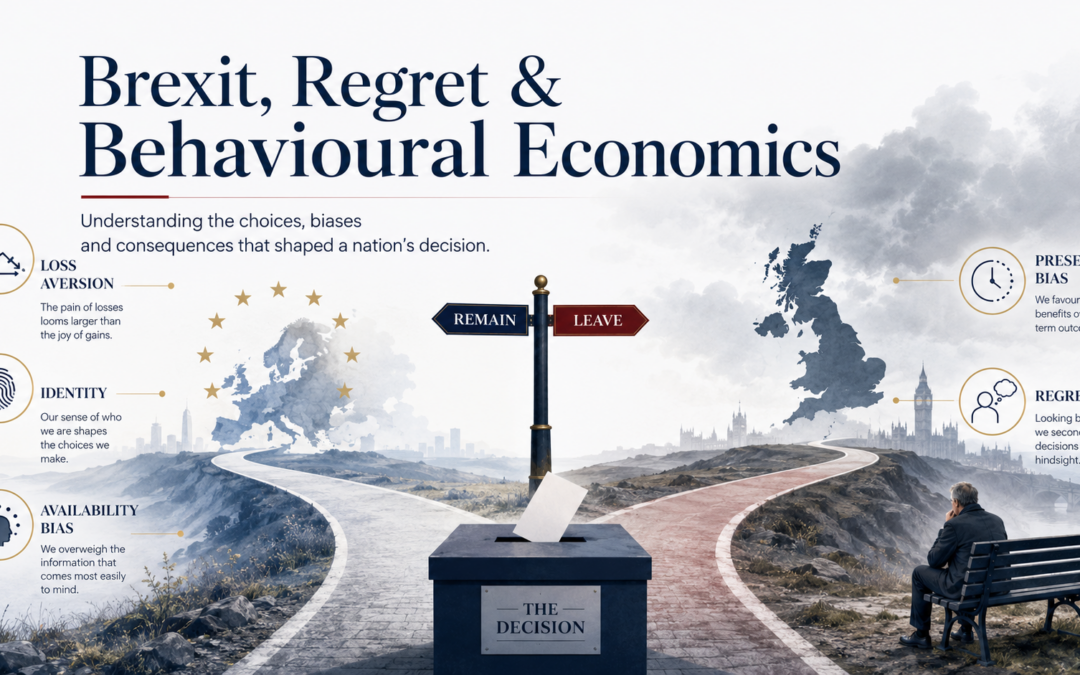
Brexit, Regret and the Behavioural Economics of Bad Decisions
The resignation of yet another British Prime Minister is not only a political story. It is also a behavioural one. Brexit has become one of the most powerful modern case studies in how people make high-stakes decisions under emotion, uncertainty and identity pressure....

Cutting Through the Noise: The Ridgeline Approach to Leadership Communication
Everyone knows the sounds of their incoming communication. Emails landing in the inbox, chat pings online, and WhatsApp beeps all contribute to cognitive overload. The traditional approach to leadership communication often feels like shouting into a hurricane. Louder...

A Laugh in the Spotlight: Some crazy moments as an MC
There’s a certain art to being an MC—balancing professionalism with personality, steering the programme while keeping the mood light. Over the years, I’ve found myself in all sorts of hilarious situations at the podium, but a few experiences stand out as my all-time...

Beyond the Bush Lodge: Why Your Next Executive Offsite is Performance Infrastructure, not a Perk
In the South African business landscape, we are currently navigating a uniquely noisy macro picture. From the accelerating shift toward AI-integrated workflows to the stop-start nature of global trade and local economic pressures, the external environment is...

Purpose Sets the North Star; Strategy Redraws the Route
Leaders often find themselves at a crossroads: should they meticulously refine their strategy, or should they take a step back to clarify their fundamental purpose? At Ridgeline Consulting, we firmly believe that purpose sets the non-negotiables; strategy is the route...

Preserving Your Company’s Unique Flavour: The Art of Cordialism
Companies often find themselves in a peculiar predicament: as they expand, merge, or undergo significant transformations, they risk losing their distinctive essence—their unique 'flavour'. This phenomenon, which Ridgeline Consulting aptly terms 'Cordialism', draws a...

From Quiet Quitting to Committed Teams: A Leader’s Guide to Building a Culture of Control and Voice
Quiet quitting is a design problem, not a motivation problem. Learn how to build a culture of control, voice, and clarity that fosters commitment and drives performance. A practical playbook for leaders. When your best people start doing the bare minimum, it’s easy to...
From Perks to Performance: A Behavioural Strategist’s Guide to Building a Magnetic Culture
In the modern workplace, a common misconception is that superficial perks are the primary drivers of employee engagement and retention. While catered lunches and office ping-pong tables may offer temporary enjoyment, they are ultimately fleeting and fail to address...

Elevating Sales Performance: A Behavioural Strategy for Sustainable Growth
High-performing sales cultures don’t push harder—they design smarter. In today's dynamic marketplace, the traditional 'hard sell' is becoming increasingly obsolete. High-performing sales organisations are not simply pushing harder; they are designing smarter. This...