

In an era defined by relentless change—volatile markets, the accelerating pace of AI innovation, and the evolving dynamics of hybrid leadership—the very essence of effective leadership is undergoing a profound transformation. The days of heroic, top-down directives are fading, replaced by a more nuanced understanding of a leader’s true purpose: to establish and maintain a powerful operating rhythm that empowers teams to thrive. At Ridgeline, we believe that the modern leader’s job distils into three critical deliverables: Clarity, Energy, and Consequence.
Think of it not as leading a charge, but as guiding an expedition. Your team doesn’t need a grand speech at base camp; they need a clear route, a sustainable pace, and a robust plan for navigating unforeseen challenges. This approach is fundamental to robust leadership development and the enhancement of crucial leadership skills.
1. Clarity: The Compass in the Fog
Clarity is the greatest service a leader can offer. In a world saturated with information and distractions, the ability to cut through the noise and provide unambiguous direction is a competitive advantage. It’s about saying the ‘quiet part out loud’—articulating the unspoken assumptions and making the implicit explicit. To foster clarity, leaders must consistently communicate a one-page plan that addresses four fundamental questions:
1. Where are we truly headed? Define the strategic summit with precision.
2. What are our few critical bets? Prioritise three to five key initiatives, resisting the urge to dilute focus across a dozen.
3. What must we intentionally stop doing? Trade-offs are not sacrifices; they are strategic choices that create focus and conserve resources.
4. What does ‘good’ look like in my role? Establish behavioural standards and clear expectations, moving beyond vague values to actionable principles.
If you find yourself repeating these messages, you’re likely doing it right. Repetition, in this context, isn’t simplistic; it’s memorable. It builds a consistent leadership cadence that resonates through the organisation, ensuring everyone is aligned and understands the path forward.
2. Energy: Fueling the Journey with Purposeful Momentum
Energy isn’t about superficial cheerleading; it’s the deliberate cultivation of momentum that transforms intent into tangible action. It’s the rhythm that propels the team forward. Replace cumbersome monthly review marathons with agile, weekly 30-minute huddles. These sessions should be laser-focused on critical decisions, identifying and removing blockers, and defining clear next steps. This is a vital component of practical leadership training.
Crucially, celebrate progress publicly. Acknowledge ‘what moved this week,’ not just ‘what closed this quarter.’ Design opportunities for quick wins—initiatives like ‘friction hunts,’ where cross-functional teams dedicate a short sprint (e.g., five days) to eliminate a single customer’s pain point. Momentum compounds when individuals can clearly see their contributions and feel the uplift of small, consistent victories. This sustained engagement is key to fostering a dynamic work environment, especially within hybrid leadership models.
3. Consequence: Anchoring Standards and Driving Accountability
Without consequence, even the most brilliant clarity and vibrant energy will dissipate. Consequence is the mechanism that closes loops and elevates standards, ensuring that intentions translate into results. It’s about embedding accountability into the operational fabric.
- Assign clear decision owners upfront. There should never be ambiguity about who is responsible for a key choice.
- Publish concise decision notes within 24 hours. Documenting decisions ensures transparency and provides a clear record.
- Establish ‘loop-close’ Key Performance Indicators (KPIs). Track metrics such as the percentage of decisions with assigned owners and due dates or the percentage of actions closed on time. This data-driven approach reinforces accountability.
Treating standards as acts of care means being explicit about the bar for quality, coaching team members to meet it, and escalating when necessary. People perform at their best when expectations are clear, support is available, and accountability is consistent. This rigorous approach is a hallmark of effective leadership.
4. Lead Like an Endurance Adventure Athlete
Ultimately, leadership stamina will always outperform leadership drama. Protect your ‘base miles’: schedule recovery blocks, carve out deep-focus windows, and embrace asynchronous collaboration where appropriate. Your team will inevitably mirror your rhythm. Leaders who master the delicate balance between intensity and recovery sustain high performance without burning out themselves or their teams. This self-awareness and discipline are advanced leadership skills.
Equip your leaders with a practical operating rhythm that truly sticks. Discover how Ridgeline can help you build unparalleled clarity, unwavering energy, and impactful consequence into your organisational leadership cadence. Invest in comprehensive leadership development and leadership training to empower your team for the future.

When Fear Looks for a Target
South Africa knows this feeling. The WhatsApp warnings start first. Which roads to avoid. Which shops are closing early. Which areas might flare up. Whether staff will be able to get to work. Whether this will be “another July 2021”. Reports of possible unrest linked...
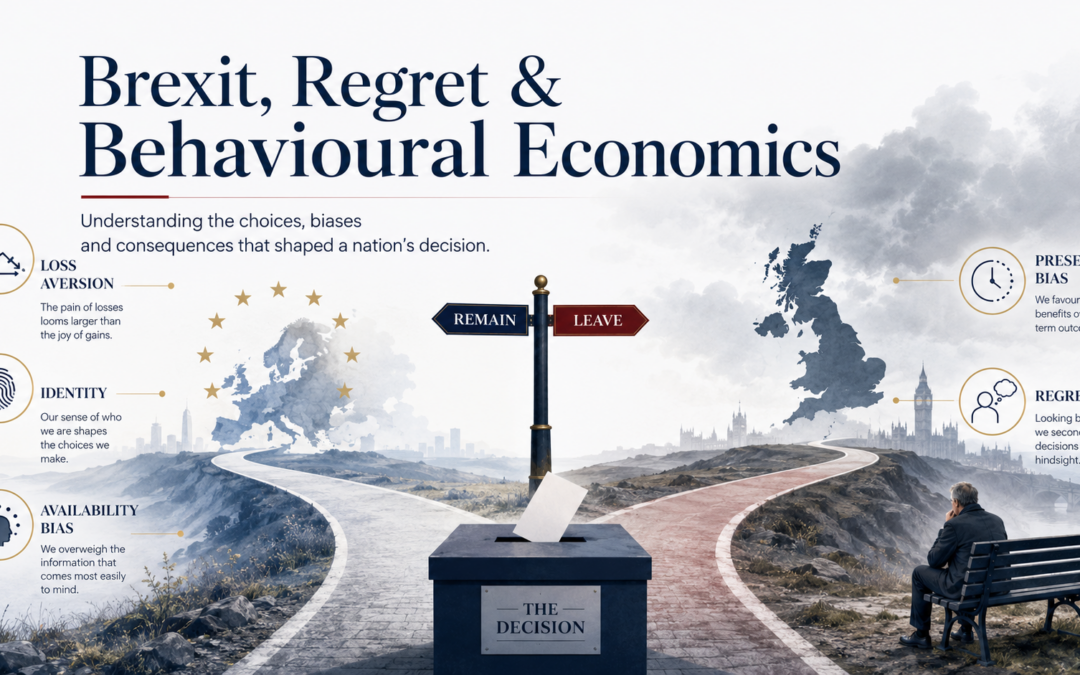
Brexit, Regret and the Behavioural Economics of Bad Decisions
The resignation of yet another British Prime Minister is not only a political story. It is also a behavioural one. Brexit has become one of the most powerful modern case studies in how people make high-stakes decisions under emotion, uncertainty and identity pressure....

Cutting Through the Noise: The Ridgeline Approach to Leadership Communication
Everyone knows the sounds of their incoming communication. Emails landing in the inbox, chat pings online, and WhatsApp beeps all contribute to cognitive overload. The traditional approach to leadership communication often feels like shouting into a hurricane. Louder...

A Laugh in the Spotlight: Some crazy moments as an MC
There’s a certain art to being an MC—balancing professionalism with personality, steering the programme while keeping the mood light. Over the years, I’ve found myself in all sorts of hilarious situations at the podium, but a few experiences stand out as my all-time...

Beyond the Bush Lodge: Why Your Next Executive Offsite is Performance Infrastructure, not a Perk
In the South African business landscape, we are currently navigating a uniquely noisy macro picture. From the accelerating shift toward AI-integrated workflows to the stop-start nature of global trade and local economic pressures, the external environment is...

Leading Through Anxiety: 5 Moves to Lift Morale (Without Sugar-Coating Reality)
South African teams are currently navigating a noisy macro picture. From headlines about AI replacing jobs to public cost-cutting and stop-start global trade, the external environment is amplifying anxiety on the office floor. Research published in Harvard Business...

Purpose Sets the North Star; Strategy Redraws the Route
Leaders often find themselves at a crossroads: should they meticulously refine their strategy, or should they take a step back to clarify their fundamental purpose? At Ridgeline Consulting, we firmly believe that purpose sets the non-negotiables; strategy is the route...

Preserving Your Company’s Unique Flavour: The Art of Cordialism
Companies often find themselves in a peculiar predicament: as they expand, merge, or undergo significant transformations, they risk losing their distinctive essence—their unique 'flavour'. This phenomenon, which Ridgeline Consulting aptly terms 'Cordialism', draws a...

From Quiet Quitting to Committed Teams: A Leader’s Guide to Building a Culture of Control and Voice
Quiet quitting is a design problem, not a motivation problem. Learn how to build a culture of control, voice, and clarity that fosters commitment and drives performance. A practical playbook for leaders. When your best people start doing the bare minimum, it’s easy to...

From Perks to Performance: A Behavioural Strategist’s Guide to Building a Magnetic Culture
In the modern workplace, a common misconception is that superficial perks are the primary drivers of employee engagement and retention. While catered lunches and office ping-pong tables may offer temporary enjoyment, they are ultimately fleeting and fail to address...